- Cama-i, quyana tailuci!
- (Central Yup’ik)
- "Greetings, thank you for coming!"

Foundational Supports - District Readiness
Foundational strategies are practices for the whole school that promote positive conditions for learning. When positive conditions are in place, students are more likely to attend and be engaged. (Definition from Attendance Works) Implementing Tier 1-3 interventions without a strong foundational support may lead schools and districts to miss key elements of addressing chronic absence at their sites. Strategies to use for district readiness may include: Focusing on improving school Culture; Recognizing good attendance; Establishing attendance expectations; Student/parent engagement; and Reviewing data.
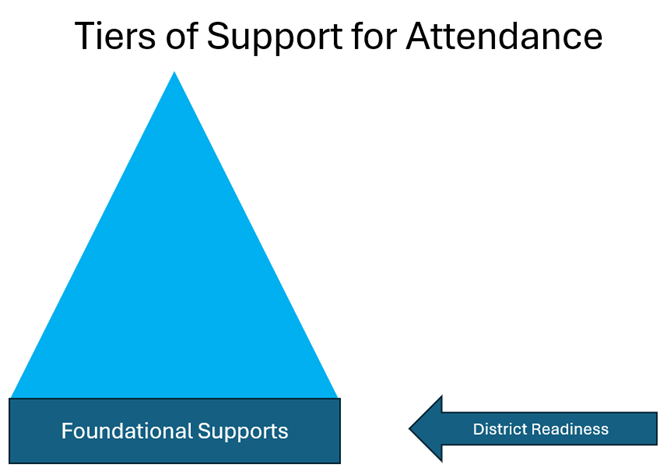
Policies should recognize that absenteeism is a leading indicator of poor academic outcomes and policy level decisions can play a central role in responding. Research has shown that school culture, attendance expectations, and engagement with students and families' matter. For more information see Attendance Works Policy Recommendations.
Data that is timely and actionable is essential to prevent and mitigate the impacts from chronic absenteeism. All schools are tracking absenteeism in various ways across the state. It is possible to review that data and to use that review to effectively respond at the district, school, and student level. Quantitative data tools are a great place to start.
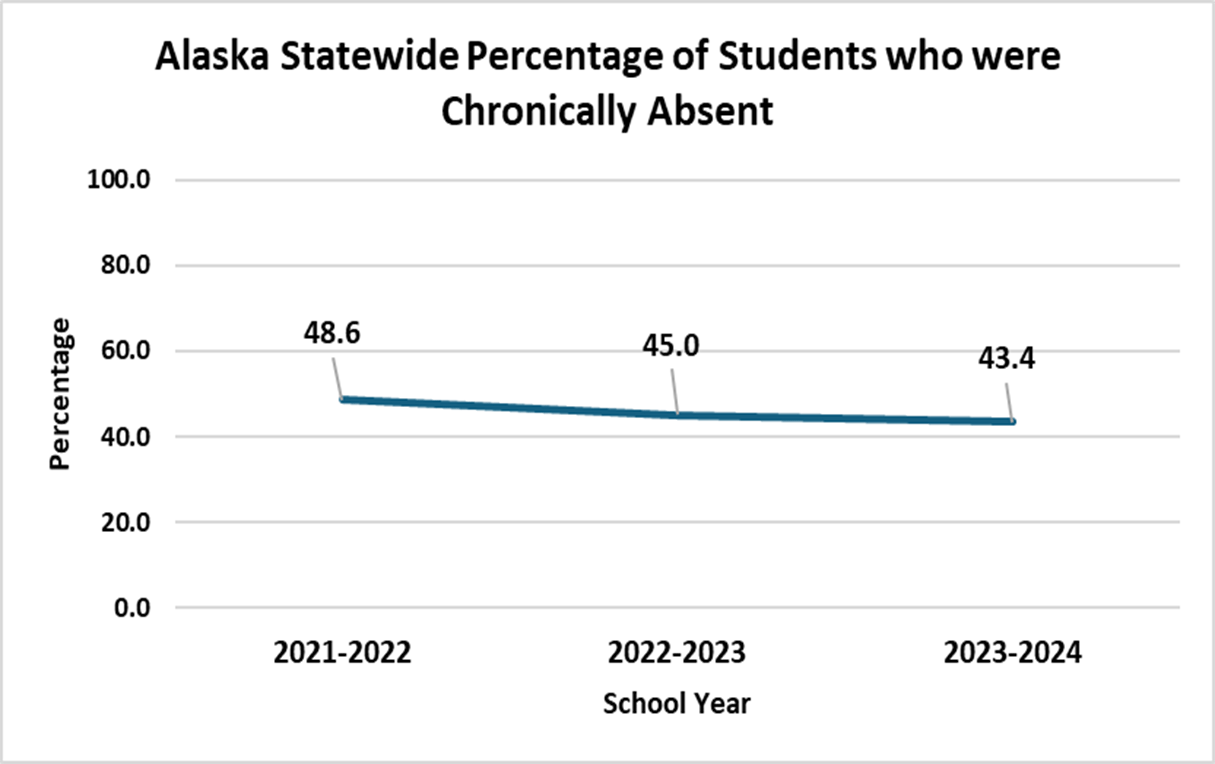
Statewide Chronic Absenteeism rates have fallen slightly since 2021-2022 but still represent some of the highest rates in the U.S.
At each grade level attendance is important state levels of Chronic Absenteeism below show, for example, that approximately half of Alaska’s youngest students are missing too many days of school.
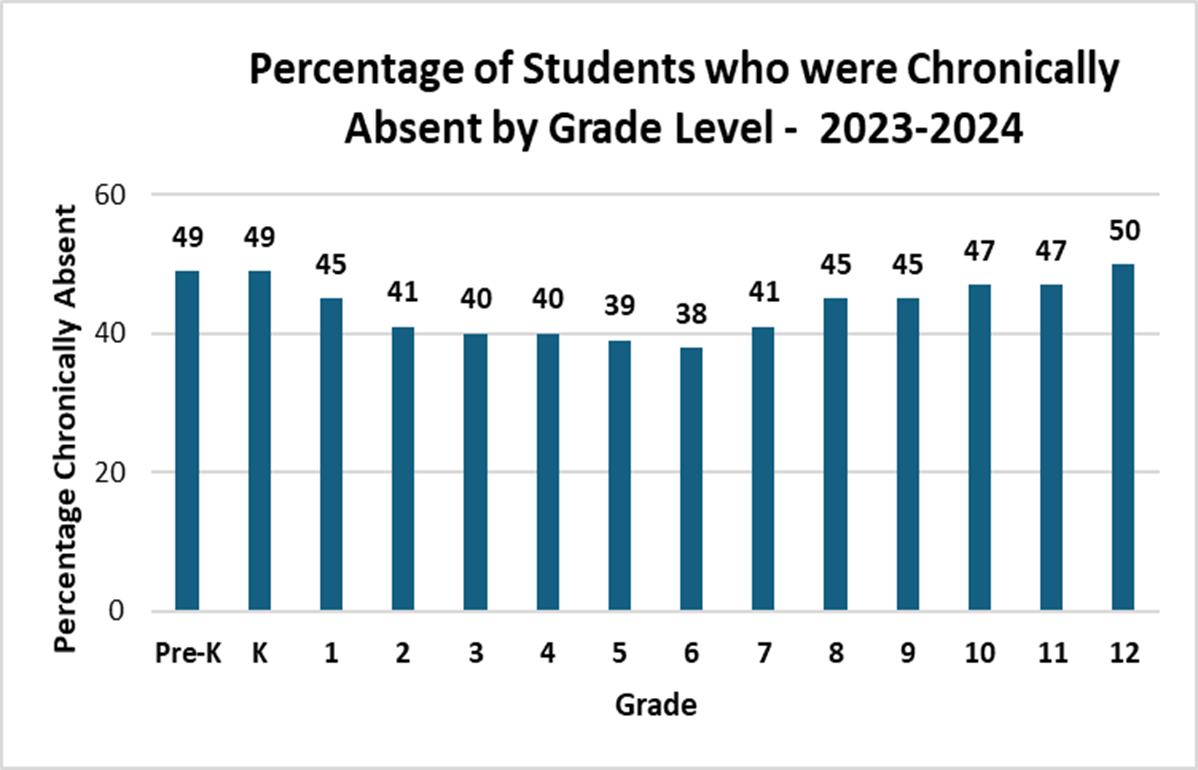
To explore the data for your school, visit the link here.
Chronic absenteeism is defined as missing at least 10% of the days in which a student was enrolled at the school. Only students who have been enrolled for at least one half of the school term are included. The chronic absenteeism indicator is not considered for correspondence schools and schools located in facilities where students are incarcerated.
Capacity to respond to the chronic absenteeism issues in Alaskan schools may already be in place. Multi-tiered Systems of Support teams or other planning and leadership teams with the right policy and data can respond to the needs of the community. Self-Assessments for states, districts, and schools that include the strategies above can help determine where resources are most needed. Another helpful resource is “Understanding the Factors Contributing to Chronic Absence in Your School”.