- Cama-i, quyana tailuci!
- (Central Yup’ik)
- "Greetings, thank you for coming!"

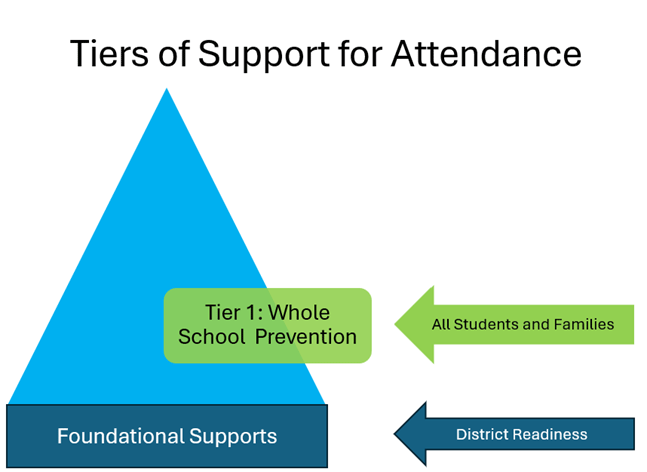
Tier 1: Whole School Prevention
Tier 1 Strategies are aimed at encouraging better attendance for all students and at preventing absenteeism before it affects achievement. Strategies to use in Tier 1 may include: Wellness checks-outreach to students and families; Discussing the impact of absences on grades; Identifying barriers; Developing robust preventions; and Monitoring/documenting daily class attendance.
Strategies for Schools
Routines, rituals and celebrations related to attendance and engagement and personalized positive communication with families and students
- The basics are outlined here.
- Making students feel welcome. This link has a short video about greetings at the door.
- Alaska specific family engagement resources are essential to build the school family partnership.
- Getting your team together with Positive Behavioral Interventions and Support can drive positive changes. (Link coming soon)
Clear, concise and consistent communication about schedules and expectations
- Parent – teacher communication strategies to start the year off right.
- Impact of attendance and absenteeism as understood by parents
- Connection to a caring adult in the school – Assets to build upon
- Every child and their family encouraged to develop a success plan that includes attention to attendance
Belonging, Connection, and Support (School Culture)
- Welcoming, safe school climate
- Healthy learning environments
- Active student and family engagement
- Advisories/meetings to build community
- Enrichment and clubs
- Positive peer connections
- Trauma Engaged Practice
Attendance Awareness and Monitoring
- Regularly Monitor Absenteeism Levels
- Identify schools and community factors affecting attendance
- Use insights to strengthen prevention and early detection
- Take coordinated action and engage in continuous improvement
School Breakfast
School breakfast programs are an effective strategy to reduce absenteeism and improve academics. Multiple studies show students who participate in school breakfast have improved attendance, behavior, and academic performance as well as decreased tardiness.
Health Services
While it's essential for students to stay home when contagious, it's equally important for them to learn how to manage feeling mildly unwell while still engaging in school.
- Communicate clearly about common symptoms to help families determine 'When is sick too sick for school?'
- Access to health care, mental health supports, food and other basic needs
- Adult and Student well-being
Strategies for Families
Family Resources and Support
- Handouts for Families – Attendance Works
- Incentives – Attendance Works
- Attendance Café with Families – Attendance Works
- Student Attendance Success Plans – Attendance Works
- Showing Up Matters for R.E.A.L. - Attendance Works - To respond to current realities, a new framework for educators who are communicating with families and students about why showing up to school matters has been developed.
- Year-Long Planning - Attendance Works - Use these calendars as a tool for planning activities and events that will keep a focus on improving attendance all year long.
- Know the school's attendance policy – incentives and penalties.
- Students and families can keep track of attendance to be sure absences are not adding up.
- Seek help from school staff, other parents, or community agencies if you need support.
- Make sure your teens are not missing class because of challenges with behavioral issues or school discipline policies. If any of these are problems, contact the school and work with them to find a solution.
- Encourage your child to join meaningful after-school activities, including sports and clubs.
- Monitor Attendance
- Establish routines
- Create a Supportive Environment
- Communicate needs with Schools
- Plan Ahead & Address Barriers