- Cama-i, quyana tailuci!
- (Central Yup’ik)
- "Greetings, thank you for coming!"

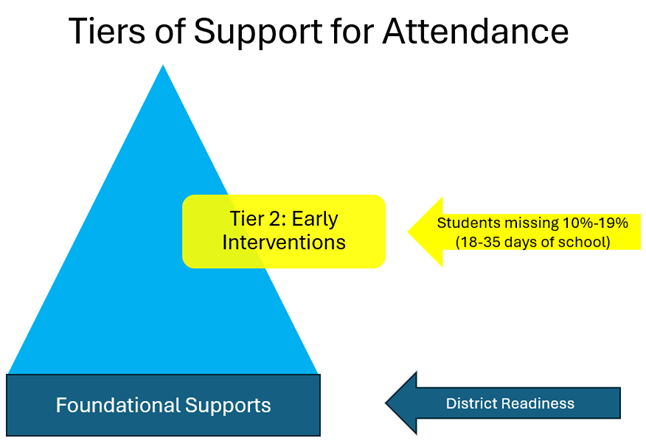
Tier 2: Early Intervention
Tier 2 Interventions are designed to remove barriers to attendance for students at greater risk of chronic absenteeism, such as those who missed 10% of the school year, the standard definition of chronic absenteeism. These students and families should receive personalized attention as part of the engagement strategy. Strategies to use in Tier 2 may include: Meeting with family about absences; Attendance contract; Intervention plan to address barriers; Intervention plan to provide service coordination and Physical/mental health supports.
Strategies for Schools
Meeting with family about absences at School
Strategy 1: Build Positive Relationships - Attendance Works
- Take attendance in a caring manner.
- Welcome each family and child at the beginning of the schoolyear.
- When possible, start your relationship with your families on their home turf by offering a home visit.
Family Engagement Can Help Ease Absenteeism in Schools | Harvard Graduate School of Education
- "Nudge" Letters Work
- The Family Ties that Bind
- Coming to School Actually Matters
Meeting with Family about Absences at Home
Virtual Check-ins to Keep Connected | Search Institute
- Topics of the Check-in
- Tips on How to Use Virtual Check-ins
- Facilitator Guides
Visiting Families at Home Leads to Better School Attendance - FutureEd
- Parent Teacher Home Visits
- Nudging Parents and Students to Better Attendance
- 5 Best Practices - The PTHV Model | Parent Teacher Home Visits
Intervention plan to address barriers
Supporting the Attendance of Students Experiencing Homelessness
- Basic Needs
- Foster Supportive School Climate.
- Implement Proven Intervention Models
- Collect Data and Implement Systems
- Team Approach
Addressing Barriers - Attendance Works
- Develop Programmatic Responses
- Identify Factors
- Address Common Challenges
- A clear and consistent process for responding to various attendance patterns.
- Timely and appropriate interventions for students in need.
- A data-driven approach to monitoring and improving attendance
Intervention plans to provide service coordination
- 5 Health Centered Supports
- Laundry at School
- School-based Health Care
- Rethinking Recess
- Healthy School Buildings
- Community Schools
- The Community Attendance Support Team (CAST) aims to lift school attendance and lower drop out numbers. Meetings between students, families, schools, and community agencies help.
- Addressing chronic absence most often needs a collaborative approach, and educators are not expected to address the complex needs of at-risk students on their own.
- In addition to teachers, who in your school building can help? Here are just a few examples.
Addressing Mental Health
Mental Health Days: School Absence Policies | National Alliance on Mental Illness (NAMI)
- Where We Stand
- Why We Care
- How We Talk About It
- What We've Done
Tools to use
The worksheets below can help Identify the likely causes of absenteeism
Strategies for Families
Family Engagement
Reduced Absenteeism Relies on Family Engagement - NAESP
- Connecting Engagement to Attendance
- Identifying Promising Practices
- Supporting Enhanced Engagement
- Seeing a Shift
Student Engagement
Student Connectedness - Attendance Works
- What do we mean by student connectedness?
- Why does it matter for attendance?
- What is the evidence that positive student connectedness improves attendance?
- Should student connectedness be a major route to reducing chronic absence in your state?
- How do your policies support student connectedness?
Addressing Mental Health
The impact of school mental health services on reducing chronic absenteeism | Mental Health America
- School-wide social and emotional supports
- School-based health centers
- School-community partnerships
- Integrated care models
- School-based health providers
- School-based teletherapy
- Going forward
School Avoidance: Tips for Concerned Parents - HealthyChildren.org
- School-related Anxiety
- What to do when your child doesn't want to go to school
- When to seek help
Family Visits
Summer Learning
Summer Learning — Alaska Afterschool Network
- Why Summer Matters
- Ways to Celebrate
- Summer Learning Week Event Submission
- Resource Guide
- Social Media Toolkit
School Breakfast
School breakfast programs are an effective strategy to reduce absenteeism and improve academics. Children who eat breakfast at school closer to class and test-taking time perform better on standardized tests than those who skip breakfast or eat breakfast at home.
Resources
Homelessness, Connectedness
- Reducing Chronic Absence for Students Experiencing Homelessness With Title I Part A and McKinney-Vento Funds.Reducing Chronic Absence for Students Experiencing Homelessness With Title I Part A and McKinney-Vento Funds. This three-pager provides a comprehensive overview of strategies to reduce chronic absence among students experiencing homelessness, utilizing Title I Part A and McKinney-Vento funds. It includes practical applications and actionable insights to address barriers to attendance, promote stability, and create supportive school environments for students experiencing homelessness.
- Supporting the Attendance of Students Experiencing Homelessness.Supporting the Attendance of Students Experiencing Homelessness. This resource shares strategies that schools, districts, and communities are implementing to help ensure that students experiencing homelessness are in school, every day.
- Student connectedness, also called school connectedness, reflects students’ belief that peers and adults in the school support, value and care about their well-being and academic growth. It is an important protective factor that promotes the health and well-being of all students.
Success mentors
- Mentoring for Enhancing School Attendance, Academic Performance, and Educational Attainment - National Mentoring Resource Center
- School Attendance and Mentoring: What's the Connection? - National Mentoring Resource Center
- Mentors - National Student Attendance, Engagement, and Success Center
- The Rise of Attendance Mentors in Schools and How They Help | Supporting Education Group