- Cama-i, quyana tailuci!
- (Central Yup’ik)
- "Greetings, thank you for coming!"

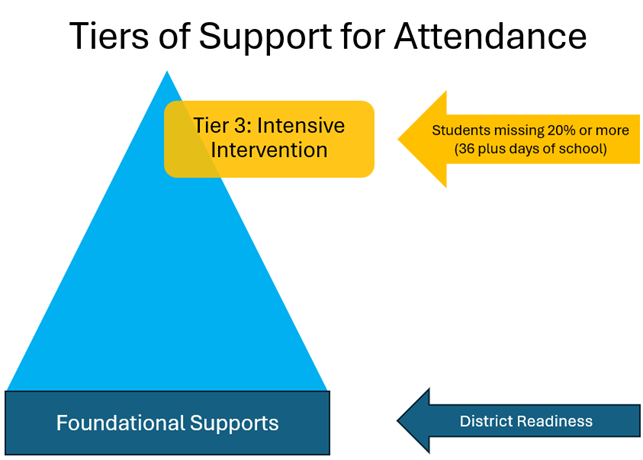
Tier 3: Intensive Intervention
Tier 3 Interventions provide intensive support to students missing the most school, often involving not just schools but other agencies such as health, housing and social services, and typically requiring case management customized to individual students’ challenges. Students missing 20% or more of the school year benefit from the addition of this intensive level of support. Strategies to use in Tier 3 may include: Re-Entry Strategies; Specialized supports; Home visits; Mentor daily check–in with student and Notifications of consequences for future absences.
Strategies for Schools
- Individualized Support like a mentoring or check-in, check-out plan.
- Interagency case management to help families get what they need.
- Provide Resources to Families
Strategies for Families
Tier 3 strategies start with a discussion between parents or caregivers that leads to an agreed upon plan between parents and staff. The Plan should include a timetable for actions each will take to reduce chronic absence.
My Child's Success Plan can help document the results of a discussion and capture the commitments both parents and the preschool program have made.
School Avoidance: Tips for Concerned Parents - HealthyChildren.org
- School-related Anxiety
- What to do when your child doesn't want to go to school
- When to seek help
Reduced Absenteeism Relies on Family Engagement - NAESP
- Connecting Engagement to Attendance
- Identifying Promising Practices
- Supporting Enhanced Engagement
- Seeing a Shift
School Breakfast School breakfast programs are an effective strategy to reduce absenteeism and improve academics. One study showed eating school breakfast increases student attendance by an average of 1.5 days of school per year and is linked to improved attendance for three in five low-income students.